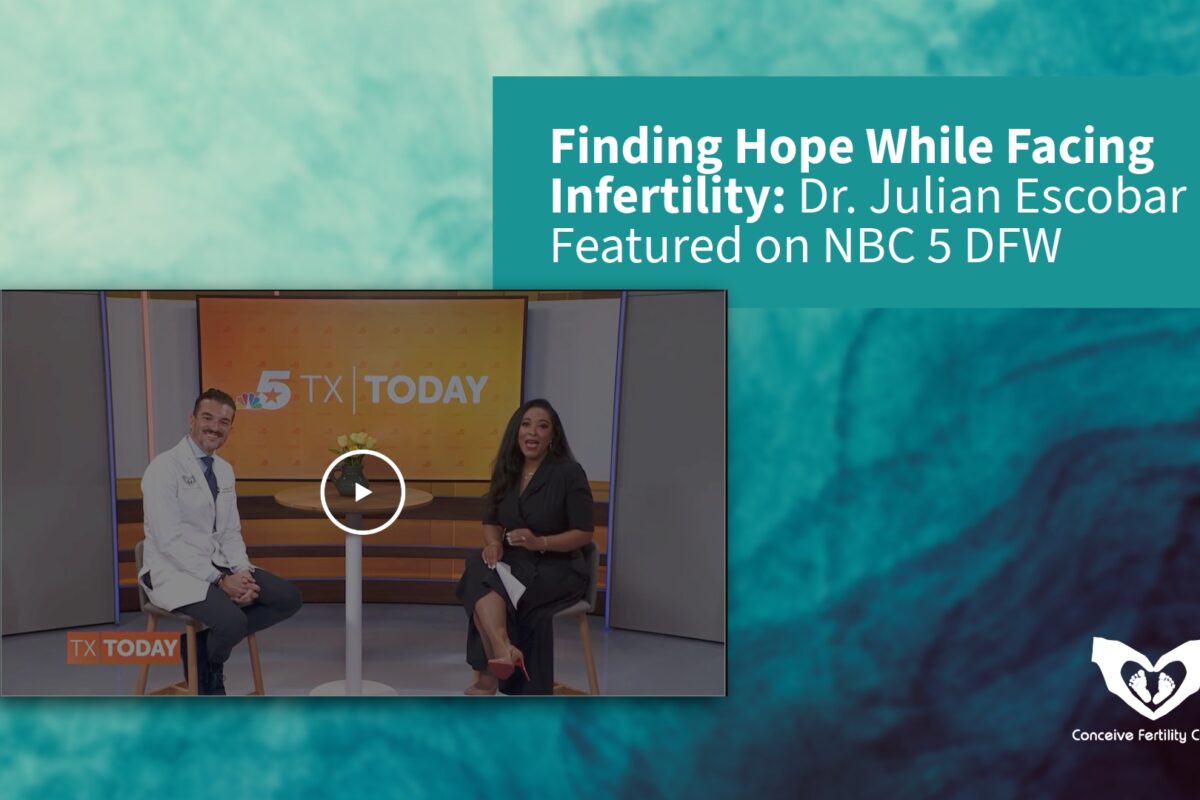
Finding Hope While Facing Infertility: Dr. Julian Escobar Featured on NBC 5 DFW

Infertility is more common than many people realize, yet for years it has remained a deeply personal and often silent struggle for individuals and couples trying to grow their families. According to recent statistics discussed during a feature on NBC 5 DFW, infertility impacts approximately 1 in 6 people worldwide. That means millions of individuals are navigating emotional, physical, and financial challenges as they search for answers and hope.

Recently, Julian Escobar of Conceive Fertility Center appeared on NBC 5 DFW to discuss infertility awareness, modern fertility care, and the importance of seeking help early. During the interview, Dr. Escobar shared valuable insights into the causes of infertility, how age impacts fertility, and the growing number of options available to individuals and couples pursuing parenthood. 

As one of North Texas’ leading fertility specialists, Dr. Escobar continues to advocate for open conversations surrounding fertility and reproductive health while helping patients build families through compassionate, personalized care.

Breaking the Silence Around Infertility

One of the most powerful themes discussed during the NBC interview was the emotional isolation many people experience while struggling with infertility. For years, infertility was often viewed as a private issue that people avoided discussing openly. However, social media, education, and growing public awareness have helped change the conversation.

Dr. Escobar explained that many women blame themselves during fertility struggles and may not even talk openly with their spouse, family, or friends about what they are experiencing. By sharing information publicly and educating patients online, fertility specialists are helping normalize these conversations and reduce the stigma surrounding infertility.

On Conceive Fertility Center’s infertility services page, patients can learn more about infertility definitions, treatment options, and common causes affecting both men and women.

When Should You See a Fertility Specialist?

One of the most important takeaways from Dr. Escobar’s NBC 5 DFW interview was knowing when to seek professional fertility care.

According to Dr. Escobar:

  • Couples under age 35 should typically seek evaluation after trying to conceive for one year without success.
  • Women over age 35 should consider evaluation after six months.
  • Women over age 40 may benefit from seeing a fertility specialist after only three months of trying.
  • Individuals with known reproductive health concerns, such as irregular menstrual cycles or previous diagnoses, should seek evaluation sooner.

Early fertility testing can provide critical answers and help patients make informed decisions about their future family planning.

At Conceive Fertility Center, fertility evaluations are designed to identify underlying causes and provide patients with a clear understanding of their reproductive health.

Common Causes of Infertility

A major point emphasized during the interview was that infertility is not exclusively a female issue. Dr. Escobar noted that male factor infertility contributes to approximately 50% of infertility cases, either as the primary cause or as part of a combined issue. 

This is why comprehensive fertility testing for both partners is so important.

Some common causes of infertility include:

Male Factor Infertility

Male infertility may involve:

  • Low sperm count
  • Poor sperm motility
  • Abnormal sperm morphology
  • Hormonal imbalances
  • Lifestyle or health factors

One of the simplest and least invasive tests is a semen analysis, which can often provide valuable information quickly.

Patients can learn more at Male Infertility Testing and Treatment.

Female Fertility Factors

For women, fertility challenges may involve:

  • Diminished ovarian reserve
  • Ovulation disorders
  • Polycystic ovary syndrome (PCOS)
  • Endometriosis
  • Tubal blockages
  • Uterine abnormalities
  • Hormonal conditions

Dr. Escobar explained that ovarian reserve testing, uterine evaluations, and imaging studies are all important parts of a comprehensive fertility workup.

Helpful resources include:

How Age Impacts Fertility

Another major topic discussed during the NBC segment was the effect of age on fertility for both men and women.

Dr. Escobar explained that while fertility declines with age in both sexes, women experience a more significant and earlier decline due to the natural decrease in egg quantity and quality over time.

Women are generally most fertile in their 20s, with fertility gradually declining through their 30s and more rapidly after age 35.

Modern life often encourages individuals to:

  • Pursue advanced education
  • Build careers
  • Achieve financial stability
  • Wait to find the right partner

While these are positive life goals, they can unintentionally delay family planning into years when fertility naturally declines.

For men, fertility decline is typically more gradual, but sperm quality can decrease after age 45 and may contribute to increased miscarriage risk and other reproductive complications.

This is one reason why fertility preservation options, including egg freezing and embryo cryopreservation, have become increasingly popular.

Patients interested in preserving fertility can learn more here:

Fertility Testing Can Empower Patients

One encouraging message shared during the interview was that fertility evaluations can provide clarity, reassurance, and empowerment.

Dr. Escobar explained that most fertility evaluations focus on four key areas:

  1. Sperm analysis
  2. Ovarian reserve
  3. Fallopian tube health
  4. Uterine health

In many cases, insurance may cover portions of the initial fertility evaluation, helping patients take the first step toward answers and treatment.

Rather than living in uncertainty, fertility testing allows patients to understand:

  • Whether natural conception is still likely
  • If treatment may improve success rates
  • What timeline may be best for family planning
  • Which treatment options fit their goals

At Infertility Testing at Conceive Fertility Center, patients can learn more about diagnostic testing and next steps.

Inclusive Family Building for Every Journey

Dr. Escobar also highlighted the importance of inclusive fertility care for:

  • Single parents by choice
  • LGBTQ+ individuals and couples
  • Patients pursuing surrogacy
  • Donor egg or donor sperm options

Conceive Fertility Center has become known for helping patients from many backgrounds pursue parenthood in a supportive and welcoming environment. Dr. Escobar himself has been recognized for advocating for inclusive fertility care and family-building access. 

Available family-building services include:

Why Patients Trust Dr. Julian Escobar

Dr. Escobar is board certified in both Reproductive Endocrinology & Infertility and Obstetrics & Gynecology. He completed fellowship training at UT Southwestern Medical Center and has been recognized multiple times as a D Magazine Best Doctor and Texas Monthly Super Doctor. 

Beyond credentials, patients throughout Dallas-Fort Worth often praise Dr. Escobar for:

  • Compassionate communication
  • Honest guidance
  • Educational social media content
  • Personalized treatment plans
  • Supportive and inclusive care

You can learn more about Dr. Escobar and patient experiences here: Meet Dr. Julian Escobar

Schedule a Fertility Consultation at Conceive Fertility Center

If you have been trying to conceive without success, you are not alone — and you do not have to navigate the journey alone either.

Whether you are:

  • Just beginning to ask questions
  • Exploring fertility testing
  • Considering IVF or IUI
  • Looking into egg freezing
  • Interested in LGBTQ+ family building
  • Seeking a second opinion

The team at Conceive Fertility Center is here to help guide you with compassionate, evidence-based fertility care.

With locations across North Texas, including Dallas, Frisco, McKinney, and Euless, Conceive Fertility Center provides advanced fertility treatment options tailored to your unique goals and circumstances. 

To schedule an appointment with Julian Escobar or another fertility specialist at Conceive Fertility Center, visit Schedule Your Consultation Today or call (214) 224-0778.
Celebrating National Infertility Awareness Week 2024: Navigating the Journey of Infertility Together

Infertility can be a deeply personal and challenging journey, but during Infertility Awareness Week 2024, we are reminded that no one needs to walk this path alone. This week is dedicated to shedding light on infertility, providing resources and support, and fostering a community of care and understanding. Whether you are directly affected or know someone who is, here are ways to navigate through infertility struggles, find professional help, and offer support to others.

 Understanding Infertility

Infertility is defined as not being able to get pregnant after one year of trying (or six months if a woman is 35 or older). It affects many couples—affecting about 1 in 8 couples according to the National Institutes of Health. Understanding that infertility is a common challenge can be the first step in reducing the stigma and isolation many couples feel.

 Seeking Support at Conceive Fertility Center

Therapeutic Support:

Dealing with the emotional impact of infertility is crucial. Conceive Fertility Center works with specialized therapy services designed to help individuals and couples navigate the complex feelings of infertility. Therapy can provide a safe space to express and process emotions and learn coping mechanisms to manage stress and anxiety associated with fertility treatments.

Fertility Treatments:

Conceive Fertility Center is at the forefront of fertility technology and treatments, offering a range of options tailored to each couple’s unique needs. From initial consultations to advanced procedures like IVF, IUI, or newer techniques such as egg freezing, our expert team is here to guide you with compassion and professionalism.

 How You Can Support Others

Supporting someone going through infertility can make a significant difference in their journey. Here are a few ways to offer your support:

– Listen Actively:

  Simply being there to listen without judgment or unsolicited advice can be incredibly comforting.

– Educate Yourself:

  Understanding the basics of infertility treatments and challenges can help you be a better supporter. It shows you care and are willing to understand their journey.

– Offer Practical Help:

  Sometimes, offering to accompany them to a doctor’s appointment or helping with tasks to free up their time can be immensely beneficial. 

– Respect Privacy:

  Let them lead the conversation about infertility. Some might be open to discussing it, while others might prefer privacy.

 Final Thoughts

National Infertility Awareness Week is a time to bring attention to the struggles many face in starting a family. It’s also a moment to highlight the resources and support systems that can make a significant difference. Let’s use this week to open up conversations, extend support, and strengthen the bonds among those affected by infertility.

Remember, whether you are dealing with infertility yourself or supporting someone who is, you are not alone.

The Emotional Journey of Infertility: Coping Strategies and Support

Embarking on the journey to parenthood can be filled with anticipation and hope, but for many, this path is met with unexpected challenges. Infertility affects millions of couples worldwide, transforming what was once a dream into an emotional rollercoaster. At Conceive Fertility Center, we understand the complexities of this journey and are committed to providing not just medical solutions but also emotional support. This blog post aims to shed light on the emotional impact of infertility, offering coping strategies and resources to support you every step of the way.

Understanding the Emotional Impact

The journey through infertility can trigger a wide range of emotions, from hope and excitement to frustration and grief. Many individuals and couples report feelings of sadness, anger, isolation, and even guilt. These emotions are natural responses to the challenges faced during this journey. Recognizing and accepting these feelings as valid is the first step towards managing them effectively.

Coping Strategies

Open Communication

One of the most vital coping mechanisms is open communication, both with your partner and with others who may be going through similar experiences. Sharing your feelings and experiences can help alleviate the sense of isolation and build a support network that understands what you’re going through.

Seek Professional Support

It’s crucial to acknowledge when you might need professional help. Counselors or therapists specializing in fertility issues can offer invaluable support, providing strategies to manage stress, anxiety, and depression that may arise. Conceive Fertility Center can recommend professionals who are familiar with the nuances of fertility challenges.

Join Support Groups

Connecting with others who are facing similar challenges can provide a sense of community and understanding. Support groups offer a platform to share experiences, tips, and emotional support. These groups can be found both in-person and online, providing flexible options for engagement.

Self-Care

Focusing on self-care is essential during this time. Engage in activities that bring you joy and relaxation, such as reading, yoga, or spending time in nature. Prioritizing your well-being can help improve your mental health and resilience throughout your fertility journey.

Educate Yourself

Understanding the processes and treatments you are undergoing can help demystify the journey and reduce anxiety. Conceive Fertility Center provides resources and educational materials to help you feel more informed and empowered about your options and what to expect.

 Resources

Fertility Counseling: Conceive Fertility Center offers referrals to specialized counselors who provide support for individuals and couples navigating infertility.

Support Groups: Organizations such as Resolve: The National Infertility Association offer a directory of support groups across the country.

Educational Resources: Our center provides access to comprehensive materials on fertility treatments, coping strategies, and the latest research in reproductive health.

Wellness Programs: We recommend wellness programs focused on fertility, offering services such as acupuncture, nutrition counseling, and stress management techniques.

The journey through infertility is uniquely personal, and the emotional toll it takes can vary greatly from one person to the next. It’s important to remember that you’re not alone, and there are resources and strategies available to support you. At Conceive Fertility Center, we’re committed to providing compassionate care that addresses both the physical and emotional aspects of fertility. Together, we can navigate this journey, focusing on your well-being every step of the way.

If you or someone you know is struggling with the emotional impact of infertility, we encourage you to reach out. Our team is here to support you, offering the resources and care you need to manage the emotional ups and downs of fertility treatments. Remember, it’s okay to seek help, and doing so can be a vital step toward healing and moving forward on your path to parenthood.

Love and Fertility: How to Prepare for Pregnancy This Valentine’s Day

Embracing the Journey Together

As Valentine’s Day approaches, it brings with it a unique blend of romance and hope, especially for couples embarking on the journey of conceiving. It’s a time when love is celebrated, and what better way to honor that love than by preparing for a future together? At Conceive Fertility Center, we understand the complexities of fertility and the emotional rollercoaster it can bring. This special day can be both an opportunity and a challenge for couples undergoing fertility treatments, and we’re here to guide you through it.

Understanding Fertility Treatments

Before diving into the Valentine’s Day preparations, let’s address what to expect from a fertility center like ours. Fertility treatments can vary greatly depending on individual circumstances. Common procedures include In Vitro Fertilization (IVF), Intrauterine Insemination (IUI), and ovulation induction. These treatments require careful monitoring by our specialists, who provide personalized care and guidance throughout the process.

Celebrating Valentines Day During Fertility Treatments

Valentine’s Day while undergoing fertility treatments can feel different, but it’s important to remember that this journey is about building a family, a testament to your love. Here are some thoughtful ways to celebrate:

1. Plan a Relaxing Day: Instead of focusing on grand gestures, opt for a relaxing day. A cozy dinner at home, watching your favorite movie, or a gentle stroll can be profoundly meaningful.

2. Communicate Openly: Use this day to strengthen your communication. Share your hopes, fears, and love with each other. This emotional bonding can be incredibly supportive.

3. Respect Each Other’s Feelings: Be mindful that fertility treatments can be emotionally taxing. If one partner is not up for a celebration, it’s okay. Being there for each other is what counts.

4. Create New Traditions: Start a new Valentine’s Day tradition that you can continue in the years to come. It could be as simple as writing love letters to each other or planting a tree together.

Tips to Remove Stress and Manage Expectations

The journey to conception can often be stressful, but there are ways to manage this:

– Stay Informed: Understanding the process can help alleviate anxiety. Feel free to ask our specialists any questions you may have.

– Practice Self-Care: Engage in activities that relax you, be it yoga, meditation, or just a warm bath.

– Seek Support: Join support groups or counseling services offered by fertility centers. Connecting with others in similar situations can be comforting.

– Maintain a Healthy Lifestyle: A balanced diet, regular exercise, and sufficient sleep are crucial. They not only improve your physical health but also your emotional well-being.

– Keep the Romance Alive: Remember that your relationship is the foundation of this journey. Keep the romance and connection alive, irrespective of the fertility process.  Surprise your partner with small gestures of kindness.  

This Valentine’s Day, as you navigate the path of fertility treatments, remember that every step you take reflects your love and commitment to each other. At Conceive Fertility Center, we are not just here to offer treatments; we are here to support your dreams of building a family. Let this day be a celebration of your love, resilience, and hope for the future.

Wishing everyone a heartfelt and meaningful Valentine’s Day.

Breaking Down Myths About IVF: What to Expect in the New Year

As we welcome the new year, it’s a perfect time to dispel some of the common myths surrounding In Vitro Fertilization (IVF) and provide clarity for those considering this journey. At Conceive Fertility Center, we believe in empowering our clients with accurate information and compassionate care. Let’s start by understanding what IVF is and then address the top six myths associated with it.

What is IVF?

In Vitro Fertilization is a series of procedures used to assist with the conception of a child. It involves extracting eggs, retrieving a sperm sample, and then manually combining them in a laboratory dish. The embryo(s) is then transferred to the uterus. IVF can be performed using your own eggs and your partner’s sperm, or eggs, sperm, or embryos from a known or anonymous donor.

Top 6 Myths of IVF

1. Myth: IVF is only for younger couples.

   Reality: IVF can be effective for people of various ages. Age is the biggest contributor affecting fertility (pregnancy, miscarriage and Down Syndrome rates) due to genetic and chromosomal issues that increase with female age. Genetic testing of embryos through IVF  allows us to select normal and healthier embryos that directly improve outcomes for patients, especially the older they are

2. Myth: IVF always results in multiple pregnancies.

   Reality: While IVF can increase the chance of multiples if more than one embryo is transferred, however current single embryo transfer practices have made it possible to minimize this risk.

3. Myth: IVF is excessively painful.

   Reality: Most women find IVF to be mildly uncomfortable rather than painful, especially with advancements in medical techniques.

4. Myth: IVF works for everyone.

   Reality: IVF significantly improves the chances of pregnancy, but it’s not a universal solution. Success rates vary based on several factors, including age and underlying fertility issues.

5. Myth: IVF babies have more birth defects and health issues.

   Reality: Most studies show that the risk of birth defects and health issues is not increased by these technologies and is related to that of the patient population 

6. Myth: Lifestyle doesn’t impact IVF success.

   Reality: Factors like diet, exercise, smoking, and alcohol use can influence the success of IVF treatments.

What to Expect Through IVF Treatment

The IVF journey is unique for each individual or couple. It generally involves initial consultations, fertility testing, ovulation induction, egg retrieval, fertilization, embryo development, and finally, embryo transfer. Throughout this process, our team at Conceive Fertility Center provides personalized care and guidance, ensuring that you understand each step and feel supported.

Scheduling a Consultation at Conceive Fertility Center

Embarking on the IVF journey is a big step, and we are here to guide you. To schedule a consultation:

– Visit Our Website: Fill out the contact form on our website for a quick response.

– Call Us: Speak directly with our friendly staff to book an appointment.

Remember, every journey to parenthood is unique. At Conceive Fertility Center, we are committed to providing you with the care and support you need to navigate your path. Here’s to a hopeful and informed new year!

Hi, How Can We Help You?