
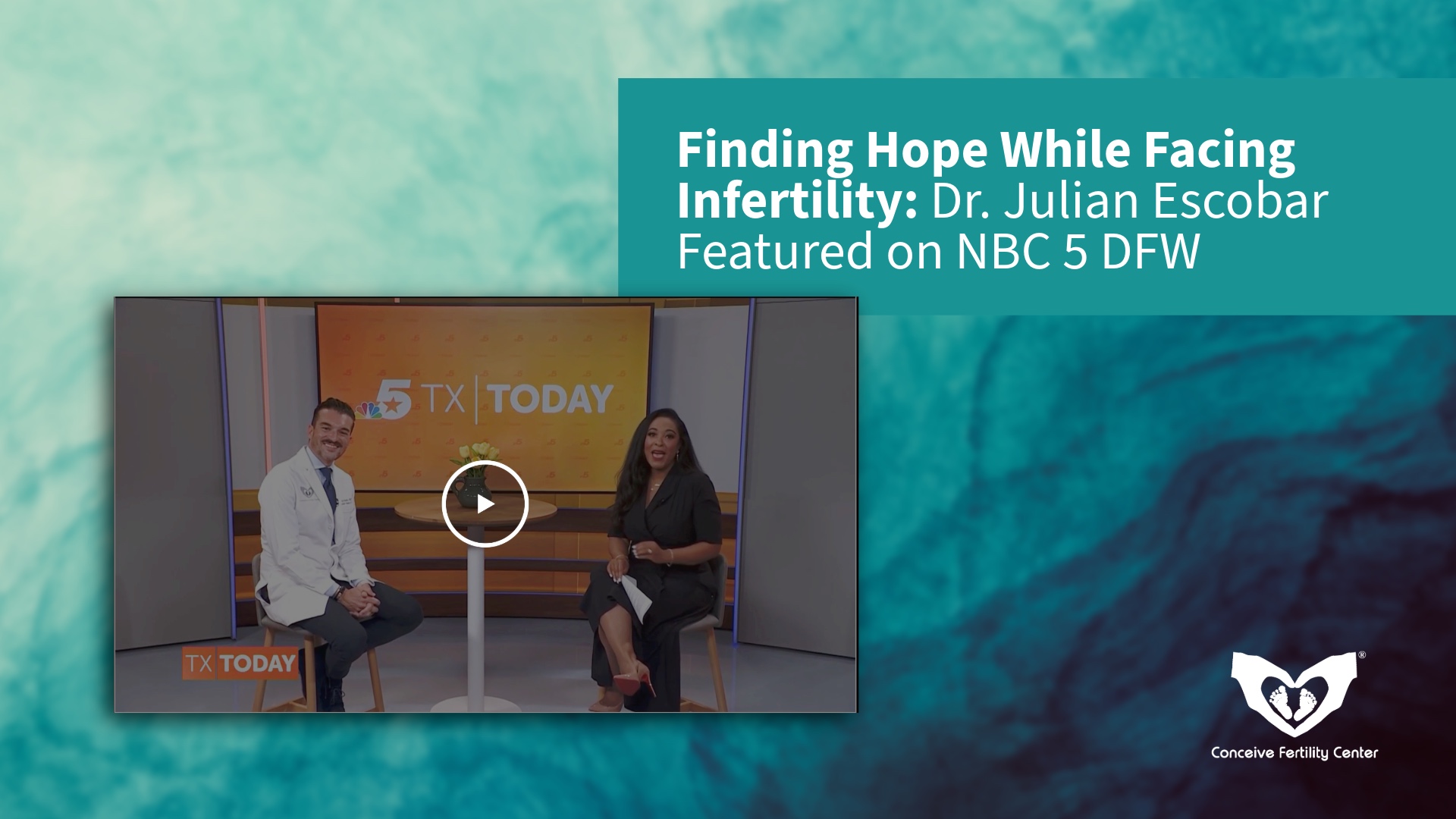
Infertility is more common than many people realize, yet for years it has remained a deeply personal and often silent struggle for individuals and couples trying to grow their families. According to recent statistics discussed during a feature on NBC 5 DFW, infertility impacts approximately 1 in 6 people worldwide. That means millions of individuals are navigating emotional, physical, and financial challenges as they search for answers and hope.
Recently, Julian Escobar of Conceive Fertility Center appeared on NBC 5 DFW to discuss infertility awareness, modern fertility care, and the importance of seeking help early. During the interview, Dr. Escobar shared valuable insights into the causes of infertility, how age impacts fertility, and the growing number of options available to individuals and couples pursuing parenthood.
As one of North Texas’ leading fertility specialists, Dr. Escobar continues to advocate for open conversations surrounding fertility and reproductive health while helping patients build families through compassionate, personalized care.
Breaking the Silence Around Infertility
One of the most powerful themes discussed during the NBC interview was the emotional isolation many people experience while struggling with infertility. For years, infertility was often viewed as a private issue that people avoided discussing openly. However, social media, education, and growing public awareness have helped change the conversation.
Dr. Escobar explained that many women blame themselves during fertility struggles and may not even talk openly with their spouse, family, or friends about what they are experiencing. By sharing information publicly and educating patients online, fertility specialists are helping normalize these conversations and reduce the stigma surrounding infertility.
On Conceive Fertility Center’s infertility services page, patients can learn more about infertility definitions, treatment options, and common causes affecting both men and women.
When Should You See a Fertility Specialist?
One of the most important takeaways from Dr. Escobar’s NBC 5 DFW interview was knowing when to seek professional fertility care.
According to Dr. Escobar:
- Couples under age 35 should typically seek evaluation after trying to conceive for one year without success.
- Women over age 35 should consider evaluation after six months.
- Women over age 40 may benefit from seeing a fertility specialist after only three months of trying.
- Individuals with known reproductive health concerns, such as irregular menstrual cycles or previous diagnoses, should seek evaluation sooner.
Early fertility testing can provide critical answers and help patients make informed decisions about their future family planning.
At Conceive Fertility Center, fertility evaluations are designed to identify underlying causes and provide patients with a clear understanding of their reproductive health.
Common Causes of Infertility
A major point emphasized during the interview was that infertility is not exclusively a female issue. Dr. Escobar noted that male factor infertility contributes to approximately 50% of infertility cases, either as the primary cause or as part of a combined issue.
This is why comprehensive fertility testing for both partners is so important.
Some common causes of infertility include:
Male Factor Infertility
Male infertility may involve:
- Low sperm count
- Poor sperm motility
- Abnormal sperm morphology
- Hormonal imbalances
- Lifestyle or health factors
One of the simplest and least invasive tests is a semen analysis, which can often provide valuable information quickly.
Patients can learn more at Male Infertility Testing and Treatment.
Female Fertility Factors
For women, fertility challenges may involve:
- Diminished ovarian reserve
- Ovulation disorders
- Polycystic ovary syndrome (PCOS)
- Endometriosis
- Tubal blockages
- Uterine abnormalities
- Hormonal conditions
Dr. Escobar explained that ovarian reserve testing, uterine evaluations, and imaging studies are all important parts of a comprehensive fertility workup.
Helpful resources include:
How Age Impacts Fertility
Another major topic discussed during the NBC segment was the effect of age on fertility for both men and women.
Dr. Escobar explained that while fertility declines with age in both sexes, women experience a more significant and earlier decline due to the natural decrease in egg quantity and quality over time.
Women are generally most fertile in their 20s, with fertility gradually declining through their 30s and more rapidly after age 35.
Modern life often encourages individuals to:
- Pursue advanced education
- Build careers
- Achieve financial stability
- Wait to find the right partner
While these are positive life goals, they can unintentionally delay family planning into years when fertility naturally declines.
For men, fertility decline is typically more gradual, but sperm quality can decrease after age 45 and may contribute to increased miscarriage risk and other reproductive complications.
This is one reason why fertility preservation options, including egg freezing and embryo cryopreservation, have become increasingly popular.
Patients interested in preserving fertility can learn more here:
Fertility Testing Can Empower Patients
One encouraging message shared during the interview was that fertility evaluations can provide clarity, reassurance, and empowerment.
Dr. Escobar explained that most fertility evaluations focus on four key areas:
- Sperm analysis
- Ovarian reserve
- Fallopian tube health
- Uterine health
In many cases, insurance may cover portions of the initial fertility evaluation, helping patients take the first step toward answers and treatment.
Rather than living in uncertainty, fertility testing allows patients to understand:
- Whether natural conception is still likely
- If treatment may improve success rates
- What timeline may be best for family planning
- Which treatment options fit their goals
At Infertility Testing at Conceive Fertility Center, patients can learn more about diagnostic testing and next steps.
Inclusive Family Building for Every Journey
Dr. Escobar also highlighted the importance of inclusive fertility care for:
- Single parents by choice
- LGBTQ+ individuals and couples
- Patients pursuing surrogacy
- Donor egg or donor sperm options
Conceive Fertility Center has become known for helping patients from many backgrounds pursue parenthood in a supportive and welcoming environment. Dr. Escobar himself has been recognized for advocating for inclusive fertility care and family-building access.
Available family-building services include:
Why Patients Trust Dr. Julian Escobar
Dr. Escobar is board certified in both Reproductive Endocrinology & Infertility and Obstetrics & Gynecology. He completed fellowship training at UT Southwestern Medical Center and has been recognized multiple times as a D Magazine Best Doctor and Texas Monthly Super Doctor.
Beyond credentials, patients throughout Dallas-Fort Worth often praise Dr. Escobar for:
- Compassionate communication
- Honest guidance
- Educational social media content
- Personalized treatment plans
- Supportive and inclusive care
You can learn more about Dr. Escobar and patient experiences here: Meet Dr. Julian Escobar
Schedule a Fertility Consultation at Conceive Fertility Center
If you have been trying to conceive without success, you are not alone — and you do not have to navigate the journey alone either.
Whether you are:
- Just beginning to ask questions
- Exploring fertility testing
- Considering IVF or IUI
- Looking into egg freezing
- Interested in LGBTQ+ family building
- Seeking a second opinion
The team at Conceive Fertility Center is here to help guide you with compassionate, evidence-based fertility care.
With locations across North Texas, including Dallas, Frisco, McKinney, and Euless, Conceive Fertility Center provides advanced fertility treatment options tailored to your unique goals and circumstances.
To schedule an appointment with Julian Escobar or another fertility specialist at Conceive Fertility Center, visit Schedule Your Consultation Today or call (214) 224-0778.